

BAE Systems has successfully test‑fired a low‑cost, precision‑guided weapon from a Eurofighter Typhoon, demonstrating a new option to counter uncrewed aircraft systems. The trial supports future upgrades aimed at expanding the Typhoon’s combat capabilities with affordable interception solutions.
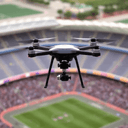
Ondas Inc. said its Sentrycs subsidiary has been selected to provide counter‑drone security at multiple FIFA World Cup venues across North America in 2026. The contracts will deploy non‑disruptive systems to detect and neutralize unauthorized drones during the tournament.

An Indian drone company's U.S. subsidiary has contracted with Airbus Helicopters for up to 18 Flexrotor unmanned aerial systems, adding long-endurance drone services to its global leasing portfolio for civil and parapublic missions.

GA-ASI and the U.S. Air Force used an MQ-20 Avenger uncrewed jet in a February demonstration to validate passive infrared targeting and autonomous coordination capabilities, advancing the development of Collaborative Combat Aircraft operations in contested electromagnetic environments.
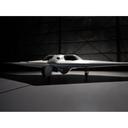
Northrop Grumman's MQ-4C Triton unmanned surveillance aircraft, operational with the U.S. Navy since 2023 and expanding in the Royal Australian Air Force, provides high-altitude maritime ISR and targeting capabilities across the Indo-Pacific, with the U.S. and Australia sharing collected intelligence data.
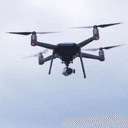
The U.S. Department of Defense has shifted management of the Blue UAS Cleared List from the Defense Innovation Unit to the Defense Contract Management Agency, marking a major step toward scaling secure, NDAA‑compliant drone procurement. As the list evolves, NW Blue is solidifying its role as a leading supplier of trusted U.S.-authorized UAS components.

Senator John Hoeven announced the activation of the Vantis Federal Radar Data Enclave, a secure integration of unfiltered radar data from the Federal Aviation Administration (FAA) with the Vantis system at the Northern Plains Unmanned Aerial Systems (UAS) Test Site.
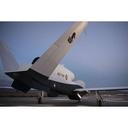
Northrop Grumman and the U.S. Air Force are accelerating B‑21 Raider production following strong performance in ground and flight testing. Supported by more than $5 billion in digital engineering and manufacturing investments, the next‑generation stealth bomber remains on track for first delivery to Ellsworth AFB in 2027. The B‑21 features sixth‑generation stealth, advanced manufacturing processes and an open architecture for rapid upgrades, making it a cornerstone of future U.S. airpower.

Aptima will continue facilitating NASA’s RAM‑AO Working Group as it develops frameworks, research and standards to scale autonomous multi‑aircraft UAS operations in the national airspace. The group meets March 3–5 at NASA Ames to advance work on safety modeling, policy gaps, crew design, validation frameworks and integrated airspace management.

Robin Radar Systems announced that its IRIS drone‑detection radar will be deployed by DHS components and local agencies to secure the FIFA World Cup 2026 in North America. The plug‑and‑play radar provides 360‑degree monitoring, rapid setup and early‑warning capabilities, building on deployments at events such as the 2024 Paris Olympics.
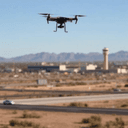
The FAA temporarily shut down and then reopened airspace over El Paso International Airport after officials said a cartel‑operated drone entered restricted airspace. The incident highlighted rising drone activity along the southern border and ongoing military efforts to prepare for unmanned‑aircraft threats. Local officials said they were not informed in advance, and federal agencies have not fully clarified the sequence of events behind the disruption.

GuRu Wireless, Uniquest and Arion have formed a strategic collaboration to develop a persistent small unmanned aerial system (sUAS) capability for intelligence, surveillance and reconnaissance missions in South Korea. The partners will demonstrate multi‑drone wireless power delivery at Drone Show Korea 2026 as they work toward field-ready, untethered persistent ISR solutions for defense and national security applications.

DroneShield has appointed Michael Powell as chief operating officer to support global expansion and operational scale. Powell brings more than 25 years of senior leadership experience across defense, aerospace and critical infrastructure sectors and will oversee the company’s global operations, manufacturing and supply chain as demand for counter-UAS capability continues to grow.

UNIFY.C2, an airspace command-and-control platform developed by SPS Aerial Remote Sensing, has partnered with Pierce Aerospace to integrate Remote Identification technology into its system. The collaboration embeds Pierce Aerospace’s Remote ID capabilities into UNIFY.C2’s unified operating picture, enhancing real-time detection, identification and attribution of unmanned aircraft across defense, public safety and critical infrastructure operations. The integration is designed to improve situational awareness, reduce operator workload and support regulatory requirements for UAS monitoring in complex, multi-agency environments.
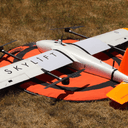
Skylift UAV has completed a UK aviation first, conducting coordinated beyond-visual-line-of-sight drone operations across the Solent as part of the Solent Future Transport Zone’s Drones for Medical Logistics project. The Civil Aviation Authority-approved trials took place in June and July 2025 and involved multiple uncrewed aircraft operating simultaneously in coordination with emergency services. The project demonstrated the safe use of drones for delivering critical medical supplies in congested airspace and is expected to inform future UK BVLOS regulation and drone corridors.

General Atomics Aeronautical Systems Inc. has begun construction of a new 85,000-square-foot hangar at El Mirage Airfield in Southern California to support testing and operations of the MQ-9B SkyGuardian and SeaGuardian aircraft. The expansion reflects growing global demand for the MQ-9B and includes space for ground control stations, aircraft launch pads and gate terminals.

Hirth Engines and ePropelled have announced a strategic partnership to develop next-generation hybrid propulsion systems for UAV, aerospace, defence, and specialised mobility applications, combining advanced two-stroke engines with intelligent electric propulsion and power-management technologies. The collaboration aims to deliver lighter, more energy-efficient, and highly reliable systems that extend mission endurance, reduce operating costs, and meet emerging sustainability standards, with prototype demonstrations expected in early 2026.

In October 2025, the 319th Reconnaissance Wing at Grand Forks AFB was selected to lead the Point Defense Battle Lab, partnered with the 184th Wing, Kansas Air National Guard, to support Air Combat Command’s Point Defense Task Force and the Department of the Air Force’s counter-small UAS mission. The Battle Lab will serve as a collaborative hub to develop, test, and validate technologies, tactics, and procedures to detect and defeat small unmanned aircraft threats to Air Force installations. By integrating Total Force expertise in unmanned systems, air battle management, cyber operations, and AI-enabled ISR, the PDBL will enhance installation defense and ensure continued airpower readiness against evolving threats.

Trimble announced that Volatus Aerospace has integrated the Trimble PX-1 RTX solution into its commercial delivery drone operations to enable highly accurate positioning, heading, and fully remote BVLOS missions. Using CenterPoint RTX corrections and GNSS-inertial technology, the system delivers real-time, centimeter-level accuracy, helping Volatus safely operate in tightly controlled airspace at Edmonton International Airport, including precision takeoff, landing, and low-altitude flight beneath active runway paths. The integration strengthens safety, regulatory compliance, and scalability for critical medical deliveries, marking a key milestone for commercial drone delivery and advanced air mobility.

The German Aerospace Center and Frequentis are collaborating to develop advanced U-space procedures that support the safe and coordinated integration of drones into European airspace. The initiative will establish a realistic testing environment for UAS operations aligned with EU regulations and future airspace concepts.

The UAE’s General Civil Aviation Authority has accredited five training centers specializing in unmanned aircraft systems as part of efforts to strengthen professional competencies in the civil aviation sector. The accreditation supports expanded access to certified UAS training while reinforcing national safety and regulatory standards.
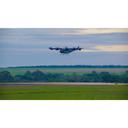
Eve Air Mobility has completed the first flight of its uncrewed, full-scale electric vertical takeoff and landing aircraft at Embraer’s test facility in Brazil. The milestone marks the start of the company’s flight test campaign as it advances toward certification and entry into service later this decade.
Federal restrictions prohibiting the use of certain foreign-manufactured drones on federal and federally assisted projects took effect Dec. 22, 2025. The rules, implemented under the National Defense Authorization Act for Fiscal Year 2024, bar contractors and funding recipients from operating or purchasing covered unmanned aircraft systems with federal funds.
Skunk Works and XTEND demonstrated an integrated autonomy and command-and-control solution that enables a single operator to manage multiple classes of unmanned aircraft systems during complex missions. The collaboration supports joint all-domain command and control by reducing manpower requirements and improving situational awareness in contested operational environments.

A new national study reveals widespread interest among U.S. row-crop farmers in adopting agricultural drone technology, with strong indicators of future purchasing and expansion. The research, conducted by Stratovation Group and sponsored by several agricultural and technology partners, highlights both the drivers and barriers influencing drone adoption in crop production. Findings show a significant growth pathway for drone-based services as farmers increasingly view drones as essential operational tools.

High Lander and Starling Inc. signed a memorandum of understanding to integrate Starling’s long-range eVTOL aircraft and docking technology with High Lander’s fleet management and UAS traffic management systems. The collaboration is designed to enable scalable, compliant beyond-visual-line-of-sight operations for commercial, public safety and homeland security missions in line with the FAA’s emerging BVLOS framework. The partnership leverages Starling’s high-performance Pathfinder-X drone and autonomous ground station alongside High Lander’s Orion DFM and Vega UTM platforms.

MatrixSpace has been named the active sensor winner in the U.S. Army’s Operation Flytrap 4.5 xTechCounter Strike competition, standing out as the only active-sensing provider among 15 finalists. The company demonstrated rapid deployment, seamless FAAD-C2 integration and AI-powered radar capability. The win includes a $350,000 award and entry into the Army’s new G-TEAD Marketplace for streamlined procurement.

Parrot has secured a major three-year contract to supply its ANAFI UKR micro-UAS to a European defense force, marking one of the company’s most significant defense awards to date. The procurement program includes large-scale fleet delivery, lifecycle support, training and multi-year expansion options. ANAFI UKR’s autonomous navigation, embedded AI and hardened cybersecurity will enhance frontline situational awareness and tactical decision-making.
Anduril participated in Digital Shield 1.0 in Estonia, connecting U.S. and allied sensors, radars and command-and-control systems into a unified, resilient network supporting NATO’s emerging Eastern Flank Deterrence Line. The exercise demonstrated how shared data, interoperability and digital speed can counter increasing Russian airspace incursions. The results highlight that NATO’s deterrence advantage will rely on real-time connectivity, distributed systems and rapid integration across the alliance.

Fortem Technologies has been selected as one of the first companies admitted to the U.S. Army’s new G-TEAD Marketplace, a contracting framework designed to rapidly deliver advanced technology to operational users. The designation allows Army and U.S. government agencies to acquire Fortem’s counter-UAS systems quickly and without additional competition. The selection underscores Fortem’s vetted capabilities and supports the Army’s broader acquisition modernization efforts.
Advertisement

@ Copyright 2026 - BBI International - All rights reserved.