

Echodyne opens Washington manufacturing facility to boost radar production amid rising global demand

Echodyne has opened a new Washington manufacturing facility capable of producing more than 30,000 MESA® radar systems annually, expanding production capacity to meet growing global demand for counter-drone and defense applications while adding up to 200 jobs.

Schaeffler and Delair will establish a new drone production line in France capable of manufacturing up to 100 drones per day by late 2026, strengthening Europe's unmanned aerial systems manufacturing capacity.
TB2 Aerospace successfully demonstrated its DROPS autonomous cargo delivery system for the U.S. Air Force's 820th Base Defense Group, using unmanned aircraft to autonomously deliver 22-pound payloads during airfield defense operations. The demonstration marks a key milestone under the company's AFWERX STTR Phase II contract supporting autonomous logistics for Agile Combat Employment missions.

A DroneShield survey of 23 airport and critical infrastructure operators found widespread gaps in counter-drone readiness, with many organizations citing inadequate detection capabilities and limited legal authority to respond to unauthorized drones. The report says stronger regulations, operational planning and training are needed alongside technology improvements.

Skyryse and Robinson Helicopter Company will develop an autonomous military drone based on the Robinson R66 helicopter using Skyryse's SkyOS flight autonomy system. The companies say the partnership aims to rapidly produce a scalable, domestically manufactured unmanned aircraft for a range of defense missions.

The U.S. Army's Joint Interagency Task Force 401 and the FBI are expanding counter-drone training for law enforcement as part of preparations for the 2026 FIFA World Cup and other major public events. The effort focuses on improving operational coordination and sharing military counter-UAS expertise with domestic agencies.

Aaronia AG launched the AARTOS Hawk T1 at Eurosatory 2026, an airborne drone detection and RF geolocation system that provides real-time tracking of drones and operators from the air, extending the capabilities of traditional ground-based surveillance systems.

Mach Industries has received a Defense Innovation Unit contract to develop Atlas, a runway-independent unmanned strike aircraft for naval and expeditionary operations. Developed with Whisper Aero, the hybrid-electric aircraft is designed to carry a 1,000-pound payload up to 1,400 nautical miles while operating from ships and austere locations with minimal infrastructure.
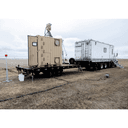
Scientists at the U.S. Naval Research Laboratory demonstrated a laser system that can both wirelessly transmit power and counter drone threats. The field test showed the system operating in adverse weather and rapidly switching between missions, highlighting its potential to support expeditionary military operations while reducing reliance on traditional fuel-based power sources.
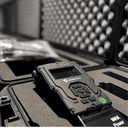
DroneShield has produced its first EU-manufactured counter-drone systems, marking a key step in expanding its European manufacturing footprint. The move supports regional defense industrial goals, strengthens supply-chain resilience and enables European customers to access locally produced versions of the company's AI-powered CUAS technology
DroneShield and Defenture have signed a partnership agreement to develop mobile counter-drone defense systems. The collaboration combines DroneShield's counter-UAS technology with Defenture's tactical vehicle platforms to create deployable solutions for military and security customers facing increasing drone threats.
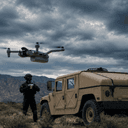
Red Cat Holdings has introduced Hellcat, a new tactical drone built on its Black Widow platform and designed for defense and security customers worldwide. The system features GPS-denied navigation, modular architecture, extended flight endurance and configurable mission capabilities shaped by battlefield feedback and operational experience.

MatrixSpace has appointed counter-drone industry veteran John Knag as vice president of product. Knag brings extensive experience in C-UAS, drone detection and electronic warfare, and will help accelerate the company’s product roadmap and strategic industry integrations as global demand for counter-drone solutions expands.
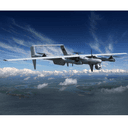
Airbus presented a broad range of uncrewed aerial systems at ILA Berlin 2026, including new combat, tactical and logistics drones such as the U145, U760 Ravenstorm and U680 Bird of Prey. The company highlighted its expanding autonomous flight portfolio designed to support multi-domain military operations across Europe.
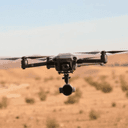
Perennial Autonomy has been awarded a three-year, $500 million IDIQ contract to provide AI-driven counter-unmanned aerial systems to the U.S. Department of War. The contract, coordinated by Joint Interagency Task Force 401, will support deployment of autonomous defense systems across multiple operational theaters.
Lockheed Martin successfully intercepted a Group 3 one-way attack drone using a Joint Air-to-Ground Missile launched from its GRIZZLY containerized launcher and coordinated through the Sanctum counter-unmanned aerial system. The demonstration highlighted a rapidly integrated, scalable and modular counter-drone defense capability.

Swarm Aero has selected Honeywell Aerospace’s TPE331 turboprop engine to power its large-scale, multi-mission Group 5 uncrewed aircraft system. The companies are collaborating on aircraft design, development and operations as Swarm advances production of its next-generation UAV platform.

Joint Interagency Task Force 401 evaluated the SkyValor counter-drone system during operational testing at Marine Corps Air Station Yuma, Arizona. The system demonstrated the ability to detect, track, identify and defeat small unmanned aerial systems while supporting layered border security operations.
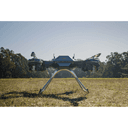
Parallel Flight Technologies has secured an FAA 44807 exemption, allowing commercial operation of its Firefly heavy‑lift hybrid unmanned aircraft system in the U.S. The decision enables missions such as wildland fire support, logistics, and heavy‑power sensor work. Firefly’s hybrid propulsion system supports 100‑pound payloads and high endurance, backed by significant government agency support. The company expects to begin customer deliveries this summer and will expand production to meet rising demand.
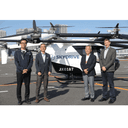
Skyports Infrastructure deployed its Vertiport Automation System during a five-day eVTOL demonstration in Tokyo in late February, supporting SkyDrive flight operations over Tokyo Bay and previewing a future air taxi passenger terminal experience for the Japanese public.

Skyports Drone Services and HochTief have launched an automated BVLOS “drone‑in‑a‑box” system to survey the Rheinbrücke Leverkusen bridge construction project in Germany. Operated remotely from Madrid, the system delivers weekly 2D and 3D site data, improving accuracy, reducing staffing needs, and helping monitor progress on the bridge, which is expected to be completed by 2028.
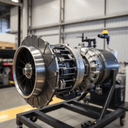
MTU Aero Engines has acquired drone propulsion specialist AeroDesignWorks, expanding into unmanned aerial vehicle and guided missile propulsion. The deal strengthens MTU’s defense portfolio while combining industrial-scale manufacturing with startup-level innovation.
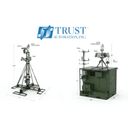
Echodyne has been named the radar provider for Trust Automation’s counter-drone systems under a $490 million U.S. Air Force contract. The company’s EchoShield radar will be integrated across multiple deployable and fixed-site air defense platforms designed to counter small unmanned aircraft.
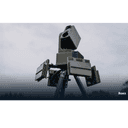
Roke has launched CORTEXA GUARDIAN, a modular counter-drone system designed for rapid use by any soldier, following collaboration with UK and Northern European armed forces and early operational deployment by customers.

Vice Chief of Space Operations Gen. Shawn Bratton visited Grand Forks Air Force Base as plans move forward for a $250 million Space Operations Center, highlighting the region’s growing importance in U.S. space and defense strategy.
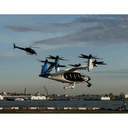
Downtown Skyport hosted New York City’s first point-to-point eVTOL flights during Joby Aviation’s April–May “Electric Skies Tour,” supporting five landings and showcasing Manhattan’s readiness for future electric air taxi operations.
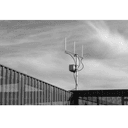
Pierce Aerospace will deploy a network of Remote ID sensors across Silicon Valley and the San Francisco Bay Area under a NASA-supported program, expanding airspace awareness and supporting research into drones, air taxis and future aviation technologies.

MatrixSpace is supporting the Flytrap 5.0 U.S. Army exercise in Lithuania with portable radar and AI technology that enhances detection of low-altitude drone threats. Its systems improve airspace awareness and extend the effectiveness of existing counter-drone defenses.
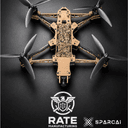
SPARC AI and Rate Manufacturing announced a partnership to integrate GPS-denied navigation and targeting technology into military drone systems. The companies said the collaboration will help drones maintain operational effectiveness in environments where GPS signals are disrupted or unavailable.
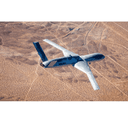
General Atomics Aeronautical Systems and U.S. Air Force partners conducted a flight test pairing an F-35 Lightning II with an MQ-20 Avenger drone surrogate, demonstrating autonomous command and coordination capabilities central to the future of collaborative air combat.
Advertisement

@ Copyright 2026 - BBI International - All rights reserved.