

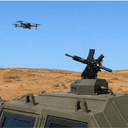
Axon Vision has launched ForceField, an Edge AI-powered counter-UAS system designed to protect maneuvering forces from FPV drones and other aerial threats. The company says the modular solution combines passive detection, AI-driven targeting and kinetic response into a single platform and has successfully completed live-fire testing.
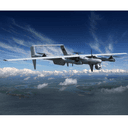
Airbus presented a broad range of uncrewed aerial systems at ILA Berlin 2026, including new combat, tactical and logistics drones such as the U145, U760 Ravenstorm and U680 Bird of Prey. The company highlighted its expanding autonomous flight portfolio designed to support multi-domain military operations across Europe.

Lockheed Martin successfully intercepted a Group 3 one-way attack drone using a Joint Air-to-Ground Missile launched from its GRIZZLY containerized launcher and coordinated through the Sanctum counter-unmanned aerial system. The demonstration highlighted a rapidly integrated, scalable and modular counter-drone defense capability.
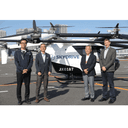
Skyports Infrastructure deployed its Vertiport Automation System during a five-day eVTOL demonstration in Tokyo in late February, supporting SkyDrive flight operations over Tokyo Bay and previewing a future air taxi passenger terminal experience for the Japanese public.

Skyports Drone Services and HochTief have launched an automated BVLOS “drone‑in‑a‑box” system to survey the Rheinbrücke Leverkusen bridge construction project in Germany. Operated remotely from Madrid, the system delivers weekly 2D and 3D site data, improving accuracy, reducing staffing needs, and helping monitor progress on the bridge, which is expected to be completed by 2028.
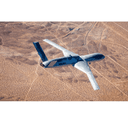
General Atomics Aeronautical Systems and U.S. Air Force partners conducted a flight test pairing an F-35 Lightning II with an MQ-20 Avenger drone surrogate, demonstrating autonomous command and coordination capabilities central to the future of collaborative air combat.
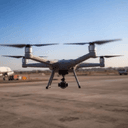
The Defense Department has chosen five military bases across the U.S. to support testing and development of directed-energy systems aimed at countering drone threats, as part of a broader effort to strengthen defenses against unmanned aircraft.

Produced by UAS Magazine, the UAS Summit will provide a comprehensive overview of the unmanned aircraft systems industry while celebrating two decades of leadership in UAS development, deployment and technology.

Texas A&M University–Texarkana is collaborating with Texarkana College and Red River Army Depot on a military drone technology project funded by a $5 million state defense grant. The initiative will support drone production, battery research, and workforce training while strengthening the region’s military and economic base.

Vigilant Aerospace has deployed a FlightHorizon TEMPO airspace management system with multiple long-range radars at the Oklahoma Air and Space Port in Burns Flat, advancing the state's push to develop a national testing site for autonomous aircraft and spacecraft.
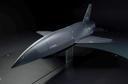
The Defense Innovation Unit and U.S. Navy have selected Anduril Industries to develop extra-large autonomous underwater vehicles under a rapid prototyping effort aimed at closing a persistent operational gap in long-range undersea capability.

A Defense Department task force focused on counter-drone coordination has awarded Anduril Industries an $87 million contract to deploy its Lattice software as the government's common tactical command and control platform for countering unmanned aerial threats.

Northrop Grumman is advancing autonomous air combat with the YFQ‑48A Talon Blue, the U.S. Air Force–designated variant of the company’s Project Talon portfolio. The aircraft represents a major step in delivering an affordable, modular, and mission‑capable autonomous wingman designed to support crewed fighters and accelerate next‑generation combat aviation.
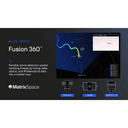
MatrixSpace has introduced Fusion 360, a portable, multi-sensor system that fuses radar, optical and RF/Remote ID data to deliver verified, real-time counter‑drone awareness. The platform reduces false alarms, identifies dark drones and provides a unified airspace picture for high‑risk environments.

Pendleton UAS Range and Sigma Design have expanded their partnership to provide integrated on-site engineering, fabrication, and staffing services for unmanned systems testing. In addition to operating the Range’s machine shop, Sigma Design now offers turnkey workforce solutions, prioritizing local talent while maintaining national recruiting reach to help customers accelerate development and flight testing.

MatrixSpace has upgraded its AI-native edge-to-cloud platform to enable real-time, multi-sensor, multi-drone detection for counter-UAS operations, delivering faster threat identification and unified airspace awareness across complex environments like critical infrastructure and public venues.
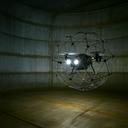
The rapid evolution of drone threats on battlefields and in civilian airspace is driving urgent demand for more adaptable and layered counter-UAS technologies, defense officials and industry leaders say. Conflicts such as the war in Ukraine have shown how low-cost, autonomous and fiber-optic-guided drones can evade traditional detection and jamming, forcing militaries to field faster, scalable solutions rather than wait for perfect systems. At the same time, concerns over drones targeting critical infrastructure, public events and borders in the United States are accelerating calls for expanded authority and new technologies that emphasize detection, attribution and non-kinetic mitigation. Experts say future counter-drone defense will rely on sensor-agnostic systems, artificial intelligence and integrated command-and-control networks capable of responding to swarms and emerging threats in real time.

A Michigan farmer’s decade-long collaboration with Michigan State University researcher Dr. Bruno Basso has drawn national attention after being featured in a 2025 New York Times story highlighting the use of precision agriculture and regenerative farming practices. Using drone data, soil modeling and remote sensing, Jeff Sandborn of Sandborn Farms has improved crop yields, reduced input costs and designated lower-producing land for environmental restoration. The work reflects broader research from MSU’s Center for Regenerative Agriculture, which uses advanced modeling and data tools to support scalable, science-based regenerative practices across the U.S. and globally.

Unifly, a Terra Drone subsidiary, has completed an FAA-supported research project validating collision-avoidance “well clear” requirements for drones. The findings support improved detect-and-avoid standards and regulatory progress for BVLOS operations and low-altitude airspace integration.

Hirth Engines and ePropelled have announced a strategic partnership to develop next-generation hybrid propulsion systems for UAV, aerospace, defence, and specialised mobility applications, combining advanced two-stroke engines with intelligent electric propulsion and power-management technologies. The collaboration aims to deliver lighter, more energy-efficient, and highly reliable systems that extend mission endurance, reduce operating costs, and meet emerging sustainability standards, with prototype demonstrations expected in early 2026.

Trimble announced that Volatus Aerospace has integrated the Trimble PX-1 RTX solution into its commercial delivery drone operations to enable highly accurate positioning, heading, and fully remote BVLOS missions. Using CenterPoint RTX corrections and GNSS-inertial technology, the system delivers real-time, centimeter-level accuracy, helping Volatus safely operate in tightly controlled airspace at Edmonton International Airport, including precision takeoff, landing, and low-altitude flight beneath active runway paths. The integration strengthens safety, regulatory compliance, and scalability for critical medical deliveries, marking a key milestone for commercial drone delivery and advanced air mobility.

Airways International’s AirShare platform has been selected by NATS Enroute Ltd to provide core technology for the OpenAir uncrewed traffic management trial in the United Kingdom. The trial will evaluate digital services and data infrastructure needed to support integrated crewed and uncrewed operations in controlled airspace.

The German Aerospace Center and Frequentis are collaborating to develop advanced U-space procedures that support the safe and coordinated integration of drones into European airspace. The initiative will establish a realistic testing environment for UAS operations aligned with EU regulations and future airspace concepts.
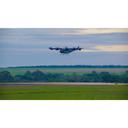
Eve Air Mobility has completed the first flight of its uncrewed, full-scale electric vertical takeoff and landing aircraft at Embraer’s test facility in Brazil. The milestone marks the start of the company’s flight test campaign as it advances toward certification and entry into service later this decade.
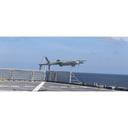
Textron Systems has been awarded a contract to deliver three Aerosonde Mk. 4.7 VTOL uncrewed aircraft systems to Tantita Security Services in Nigeria. The ITAR-free systems will support security operations focused on protecting the country’s critical oil and gas infrastructure.

EagleNXT has completed the sale of six eBee TAC tactical mapping drones equipped with advanced sensors to the U.S. Army through its European partner, Dronivo GmbH. The transaction reflects growing demand for NDAA-compliant unmanned aircraft systems supporting defense and tactical mapping missions.
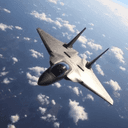
The European Union is studying a stealth-focused light attack aircraft under the European Defence Fund to address an aging and fragmented fleet of light military aircraft. The Future Multirole Light Aircraft initiative emphasizes survivability, reduced observability and counter-drone capabilities, targeting a potential operational horizon of 2035–2040. The effort remains exploratory, focused on studies and design rather than full aircraft development.
PteroDynamics and AeroVironment demonstrated integrated electronic warfare payloads on the Transwing VTOL unmanned aircraft system during the U.S. Navy’s Silent Swarm 25 exercise in Michigan. The demonstration highlighted rapid payload integration and expeditionary operations from confined environments to support future littoral surveillance missions.

Vertical Aerospace revealed Valo, its new commercial eVTOL aircraft that will succeed the VX4 prototype and is expected to enter service after achieving airliner-level safety certification targeted for 2028. Developed with major aerospace partners, Valo features a redesigned aerodynamic airframe, under-floor battery system, upgraded materials, and full certifiable redundancy. The aircraft is designed for zero-emission flights up to 100 miles and is positioned to support passenger transport, cargo, emergency medical services and future autonomous and defense applications.
MatrixSpace announced the launch of its Portable 360 Radar, a compact AI-enabled system designed to provide rapid, panoramic airspace awareness for counter-drone missions in demanding environments. The system offers low-power, portable radar capabilities with AI edge processing and enterprise-level command integration. Already adopted by major corporations and U.S. government agencies, the technology has demonstrated strong performance in field testing, including winning best active sensor in the Army’s recent xTechCounter Strike competition.
Advertisement

@ Copyright 2026 - BBI International - All rights reserved.