


Skyryse and Robinson Helicopter Company will develop an autonomous military drone based on the Robinson R66 helicopter using Skyryse's SkyOS flight autonomy system. The companies say the partnership aims to rapidly produce a scalable, domestically manufactured unmanned aircraft for a range of defense missions.
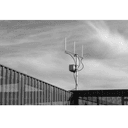
Pierce Aerospace will deploy a network of Remote ID sensors across Silicon Valley and the San Francisco Bay Area under a NASA-supported program, expanding airspace awareness and supporting research into drones, air taxis and future aviation technologies.
SPARC AI and Rate Manufacturing announced a partnership to integrate GPS-denied navigation and targeting technology into military drone systems. The companies said the collaboration will help drones maintain operational effectiveness in environments where GPS signals are disrupted or unavailable.

Birdstop has launched AI-powered drone monitoring at Detroit trucking sites in partnership with TSPS, aiming to improve truck parking visibility, safety and efficiency as part of a broader push to modernize U.S. freight infrastructure.
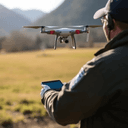
Alpine Eagle is scaling production of its Sentinel counter-drone system following accelerating demand across Europe, with new customers in multiple countries and trials conducted in Ukraine and with U.S. and U.K. forces. The Munich-based company, which has grown from 12 to 50 employees since 2024, is partnering with Dutch manufacturer DeltaQuad and planning a new production facility to meet growing allied defense requirements.

AeroVironment has introduced LOCUST X3, a third-generation modular directed energy weapon system featuring a scalable 20-35+ kilowatt laser and AI-enabled targeting designed to counter mass drone attacks. The system, which delivers engagements at under $5 per shot, is platform-agnostic and built for rapid production scale, drawing on lessons from prior deployments through U.S. Army programs.
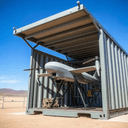
Pentagon seeks containerized systems for autonomous drone deployment
February 09, 2026
The Department of War is seeking containerized systems to automate the storage and deployment of unmanned aircraft, aiming to scale drone operations while reducing human involvement. The effort will be run through the Defense Innovation Unit and could lead directly to production contracts.

Pendleton UAS Range and Sigma Design have expanded their partnership to provide integrated on-site engineering, fabrication, and staffing services for unmanned systems testing. In addition to operating the Range’s machine shop, Sigma Design now offers turnkey workforce solutions, prioritizing local talent while maintaining national recruiting reach to help customers accelerate development and flight testing.
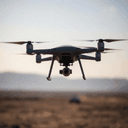
The War Department has invited 25 vendors to compete in Phase I of the $1.1B Drone Dominance Program, aiming to rapidly field low-cost, one-way attack drones at scale, with live testing starting Feb. 18 and prototype awards issued by early March.

MatrixSpace has upgraded its AI-native edge-to-cloud platform to enable real-time, multi-sensor, multi-drone detection for counter-UAS operations, delivering faster threat identification and unified airspace awareness across complex environments like critical infrastructure and public venues.

Mobix Labs has received FAA certification for its next-generation drone-based sensing platform, enabling commercial deployment and expanded use in automated infrastructure inspection markets.

XTI Aerospace has named former Mesa Air Group chairman and CEO Jonathan G. Ornstein to its board of directors, adding aviation and deal-making experience as the company expands its presence in the drone and unmanned systems market.
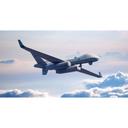
General Atomics Aeronautical Systems and Calidus Aerospace have signed an MOU to collaborate on the co-production of MQ-9B and Gambit unmanned aircraft in the UAE, marking the first prospective manufacturing of General Atomics aircraft in the region.
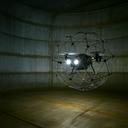
The rapid evolution of drone threats on battlefields and in civilian airspace is driving urgent demand for more adaptable and layered counter-UAS technologies, defense officials and industry leaders say. Conflicts such as the war in Ukraine have shown how low-cost, autonomous and fiber-optic-guided drones can evade traditional detection and jamming, forcing militaries to field faster, scalable solutions rather than wait for perfect systems. At the same time, concerns over drones targeting critical infrastructure, public events and borders in the United States are accelerating calls for expanded authority and new technologies that emphasize detection, attribution and non-kinetic mitigation. Experts say future counter-drone defense will rely on sensor-agnostic systems, artificial intelligence and integrated command-and-control networks capable of responding to swarms and emerging threats in real time.

Unifly, a Terra Drone subsidiary, has completed an FAA-supported research project validating collision-avoidance “well clear” requirements for drones. The findings support improved detect-and-avoid standards and regulatory progress for BVLOS operations and low-altitude airspace integration.

Vantis has enabled ISight Drone Services to become the first operator approved for BVLOS flights across all four Vantis service areas, allowing statewide drone operations in North Dakota. The FAA-approved waiver supports expanded missions, including medical delivery research, and highlights the maturity of the Vantis BVLOS system.
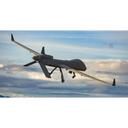
GA-ASI and the U.S. Navy successfully tested an expanded sonobuoy dispensing system on the MQ-9B SeaGuardian, doubling its payload and enabling first-ever deployment of multistatic active coherent buoys from an uncrewed aircraft. The test advances SeaGuardian’s anti-submarine warfare capability, with deployment clearance expected later this month.
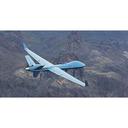
GA-ASI Makes Another Autonomous Aerial Intercept in Company-Funded Demo with MQ-20 Avenger
January 21, 2026
General Atomics Aeronautical Systems Inc. successfully demonstrated advanced mission autonomy using its MQ-20 Avenger jet, executing a live engagement scenario against a human-flown aircraft. The flight showcased the aircraft’s ability to autonomously plan, sense, track and simulate engagement of a target while complying with operational boundaries, reinforcing GA-ASI’s progress in human-machine teaming and autonomous combat capabilities for future warfighter missions.

In October 2025, the 319th Reconnaissance Wing at Grand Forks AFB was selected to lead the Point Defense Battle Lab, partnered with the 184th Wing, Kansas Air National Guard, to support Air Combat Command’s Point Defense Task Force and the Department of the Air Force’s counter-small UAS mission. The Battle Lab will serve as a collaborative hub to develop, test, and validate technologies, tactics, and procedures to detect and defeat small unmanned aircraft threats to Air Force installations. By integrating Total Force expertise in unmanned systems, air battle management, cyber operations, and AI-enabled ISR, the PDBL will enhance installation defense and ensure continued airpower readiness against evolving threats.

Trimble announced that Volatus Aerospace has integrated the Trimble PX-1 RTX solution into its commercial delivery drone operations to enable highly accurate positioning, heading, and fully remote BVLOS missions. Using CenterPoint RTX corrections and GNSS-inertial technology, the system delivers real-time, centimeter-level accuracy, helping Volatus safely operate in tightly controlled airspace at Edmonton International Airport, including precision takeoff, landing, and low-altitude flight beneath active runway paths. The integration strengthens safety, regulatory compliance, and scalability for critical medical deliveries, marking a key milestone for commercial drone delivery and advanced air mobility.
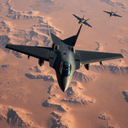
Northrop Grumman has been competitively awarded the U.S. Marine Corps’ MUX TACAIR Collaborative Combat Aircraft program, integrating its advanced autonomous mission systems with Kratos’ Valkyrie uncrewed aerial system to operate alongside crewed fighters in high-threat environments. The solution features a cost-effective advanced mission kit, Prism open-architecture autonomy software, and the Valkyrie’s flexible, modular airframe to deliver survivability, connectivity, and lethality across multiple mission sets. Backed by more than 20 successful flight demonstrations and over 500,000 autonomous flight hours, the team is offering the Marine Corps a low-risk, rapidly deployable path to persistent crewed–uncrewed expeditionary operations.
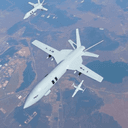
The U.S. Air Force has formally designated the YFQ-48A, a next-generation unmanned aircraft developed under its Collaborative Combat Aircraft program. Designed to operate alongside manned fighters, the platform emphasizes autonomy, modularity and lower-cost production. The aircraft reflects a broader shift toward manned-unmanned teaming as a cornerstone of future U.S. airpower strategy.
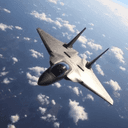
The European Union is studying a stealth-focused light attack aircraft under the European Defence Fund to address an aging and fragmented fleet of light military aircraft. The Future Multirole Light Aircraft initiative emphasizes survivability, reduced observability and counter-drone capabilities, targeting a potential operational horizon of 2035–2040. The effort remains exploratory, focused on studies and design rather than full aircraft development.
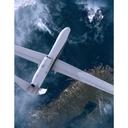
Northrop Grumman and 4iG Space and Defence Technologies signed an MOU to explore collaboration in C-UAS, space and advanced weapons systems, aiming to strengthen transatlantic defense cooperation and enhance NATO capabilities through rapid innovation.
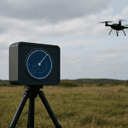
MatrixSpace Inc. was named the top performer in DIU’s Counter-UAS Low-Cost Sensing challenge, earning $500,000 for its scalable, AI-enabled sensing solution. The competition highlighted cost-effective technologies designed to strengthen layered defense and rapidly deliver counter-drone capabilities to the warfighter.
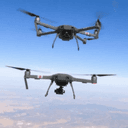
A new request for information asks U.S. manufacturers to rapidly scale production of inexpensive attack drones as part of Secretary Pete Hegseth’s plan to achieve “drone dominance” across the force.
Heven AeroTech Raises $100M in Series B, Reaches $1B Valuation as Demand for Hydrogen-Powered Drones Accelerates
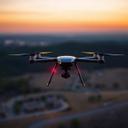
December 09, 2025
The Virginia-based UAS company will expand U.S. manufacturing, advance quantum-enabled capabilities, and scale deployment of its long-endurance, hydrogen-powered aerial systems following a major Series B investment.
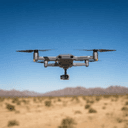
The Defense Innovation Unit has formally transitioned management of the Blue UAS Cleared List to the Defense Contract Management Agency, moving the Department’s vetted catalog of secure drones to a new command in Palmdale, California. The shift is intended to scale trusted drone procurement and support the Department’s goal of achieving small UAS dominance by 2027.
Advertisement

@ Copyright 2026 - BBI International - All rights reserved.